

Halal Certification

IHIA provides Halal certification for products, processes, facilities, and services across the Halal supply chain.

Our assessments are designed to help organizations demonstrate that their materials, suppliers, operations, handling practices, documentation, and management controls meet the applicable Halal requirements for their certification scope.

Protecting Halal Integrity Across the Supply Chain

Halal integrity depends on more than the ingredients listed on a product. It must be maintained through sourcing, production, preparation, storage, transportation, service, and final delivery.

IHIA evaluates the areas relevant to each applicant’s activities. Depending on the scope, this may include raw materials, supplier approval, production processes, hygiene, segregation, handling, storage, transportation, packaging, labeling, documentation, traceability, personnel competence, and the organization’s Halal assurance controls.

The purpose of certification is to provide a structured and independently assessed basis for Halal claims while helping organizations maintain consistency throughout their operations.

Halal Certification Areas​

Click below icons for details:

Food & Beverage

IHIA provides Halal certification for food products, ingredients, beverages, production facilities, processing operations, commercial kitchens, and related supply-chain activities.

The assessment may cover raw ingredients, additives, processing aids, supplier approval, receiving, storage, preparation, production, hygiene, equipment, contamination controls, packaging, labeling, cleaning, traceability, and applicable legal requirements.

Certification helps manufacturers and processors demonstrate that Halal integrity is maintained from the selection of materials through production and final release.

Restaurants & Food Services

Halal certification for restaurants and food services extends beyond the use of Halal meat or ingredients. The entire operation must support the integrity of the food being prepared and served.

The assessment may include ingredient sourcing, supplier verification, receiving, storage, food preparation, kitchen hygiene, equipment and utensils, cleaning, segregation, service practices, packaging, labeling, personnel awareness, and traceability.

Certification may apply to restaurants, catering companies, institutional kitchens, event food services, and other businesses that prepare or serve food.

Hotels & Hospitality

IHIA evaluates hotels, resorts, tourism facilities, and hospitality services that seek to provide a Halal-compliant or Muslim-friendly guest experience.

The assessment may cover Halal food, dining services, prayer times and Qiblah information, prayer areas, ablution facilities, washrooms, Ramadan services, guest privacy, recreational and wellness facilities, personnel awareness, cleaning, and applicable operational requirements.

The scope is determined by the facilities and services the applicant wants to include in the evaluation.

Slaughtering & Meat Processing

Halal certification for slaughtering and meat processing covers the controls used from the farm and transportation stages through slaughter, processing, storage, packaging, and distribution.

The assessment may include animal eligibility, farm and transport conditions, pre-slaughter handling, slaughtering procedures, slaughterer competence, post-slaughter processing, personnel hygiene, equipment, cleaning, traceability, storage, packaging, labeling, and applicable legal requirements.

The purpose is to ensure that Halal requirements are maintained consistently throughout the meat supply chain.

Animal Welfare

Halal animal welfare involves the responsible treatment of animals throughout their living conditions, handling, transportation, rest, and slaughter-related activities.

The assessment may review animal health, housing and living conditions, handling practices, transportation, personnel responsibilities, pre-slaughter care, and compliance with applicable Halal and legal requirements.

Organizations are expected to maintain procedures that reduce unnecessary stress and support appropriate care at every relevant stage.

Animal Feed & Inputs

The Halal integrity of animal products can be affected by the feed, additives, medicines, and agricultural inputs used throughout the animal’s life.

IHIA assesses animal feed manufacturers and related operations in areas such as raw materials, feed ingredients, water, fertilizers, pesticides, agricultural chemicals, feed additives, veterinary drugs, hygiene, production, processing, storage, transportation, sanitation, pest control, sampling, packaging, labeling, recalls, and traceability.

Certification helps demonstrate that prohibited or unsuitable materials are controlled throughout the feed supply chain.

Cosmetics & Personal Care

IHIA provides Halal certification for cosmetics, skincare, personal care products, toiletries, ingredients, and manufacturing facilities.

The assessment may include ingredient origin, supplier information, product development, equipment, weighing and measuring, production procedures, sanitation, personnel hygiene, pest control, batch identification, quality control, reprocessing, returned products, storage, packaging, labeling, complaints, recalls, internal audits, and product claims.

Certification provides a structured basis for demonstrating that ingredients and manufacturing controls meet the applicable Halal requirements.

Halal Logistics

Halal logistics helps preserve the integrity of certified products during warehousing, handling, transportation, terminal operations, and delivery.

The assessment may review segregation from non-Halal goods, warehouse controls, vehicles, containers, cold-chain operations, cleaning, handling procedures, packaging, labeling, documentation, traceability, and applicable legal requirements.

Certification is relevant to logistics providers, warehouses, transport companies, distribution centers, and supply-chain operators responsible for certified goods.

Laboratory Testing & Analysis

Laboratory testing can provide technical evidence when the Halal status or composition of a product requires scientific verification.

Relevant testing may include the detection or identification of prohibited substances, alcohol screening, meat-species identification, ingredient analysis, and other tests required by the certification scope.

Laboratories involved in Halal-related analysis may be assessed in areas such as organization, management systems, personnel competence, equipment, test methods, validation, calibration, sampling, handling, reporting, environmental conditions, traceability, nonconforming work, complaints, and legal requirements.

Islamic Clothing

IHIA provides assessment and certification support for clothing, textiles, and related products intended to meet defined Islamic and Halal requirements.

The assessment may include materials, fabric sourcing, animal-derived inputs, suppliers, manufacturing processes, handling, labeling, product claims, traceability, and the integrity of the production supply chain.

The applicable scope depends on the product type, materials used, and certification claims made by the applicant.

Islamic Banking

Islamic banking and finance are based on principles that prohibit interest-based transactions and avoid investment in activities regarded as impermissible under Islamic law.

Relevant financial structures may include Murabaha, Mudarabah, Ijarah, and other trade-, partnership-, or asset-based arrangements. Assessment may consider the nature of financial products, contractual structures, investment activities, documentation, governance, and compliance with the applicable Islamic principles.

The precise assessment scope must be defined according to the institution, financial product, and requested certification or evaluation.

What the assessment may cover

A Scope-Based Halal Assessment

Every assessment is adapted to the applicant’s products, services, facilities, and activities. Relevant areas may include:
Ingredients & Raw Materials

Origin, composition, supporting certificates, processing aids, additives, feed inputs, and other materials used in the product or service.

Suppliers & Purchasing

Supplier selection, approval procedure, records review, specifications, purchasing controls, and control methods of changes to approved materials.

Production & Service Operations

Manufacturing, preparation, slaughtering, processing, handling, service delivery, and operational controls.

Hygiene & Contamination Prevention

Cleaning, sanitation, personnel hygiene, pest control, equipment, segregation, and prevention of contact with prohibited materials.

Storage & Transportation

Warehousing, cold-chain operations, vehicles, containers, handling, segregation, and distribution controls.

Documentation & Traceability

Policies, procedures, batch records, identification, internal controls, traceability, complaints, recalls, and corrective actions.

Packaging, Labeling & Claims

Packaging materials, product information, certification marks, labels, promotional claims, and communication with customers.

Personnel & Competence

Responsibilities, training, awareness, competence, supervision, and implementation of the organization’s Halal controls.

How Halal Certification Works

halal certification

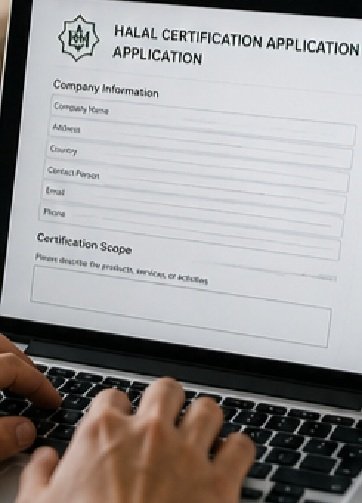
1. Application

The organization submits information about its activities, products, facilities, locations, and requested certification scope.

2. Initial Review

IHIA reviews the application to determine whether the requested scope can be assessed and what information is required.
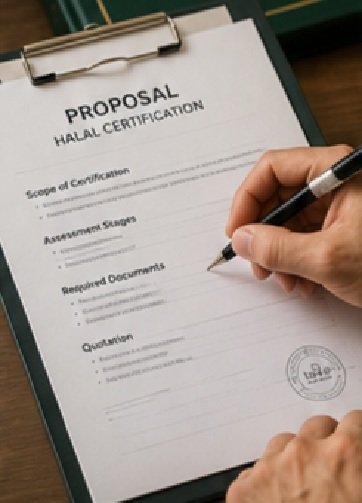
3. Proposal & Preparation

The applicant receives information about the proposed scope, required documents, assessment stages, and quotation.
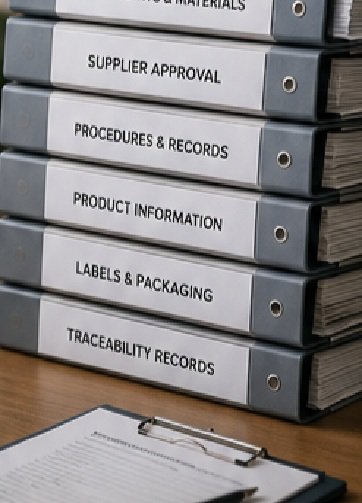
4. Document Review

Ingredients, suppliers, procedures, product information, labels, records, and supporting evidence are reviewed.

5. Audit & Technical Assessment

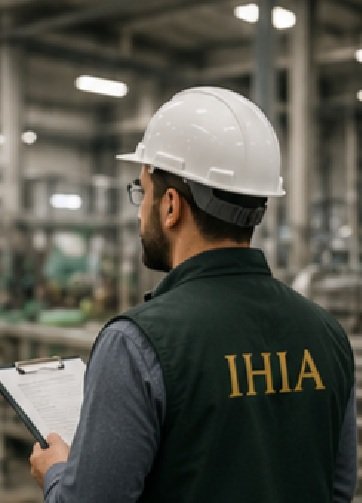
IHIA conducts the applicable assessment of the organization’s facilities, processes, personnel, and Halal controls.

6. Findings & Corrective Actions

Any identified nonconformities must be addressed and supported with appropriate evidence before the certification decision.
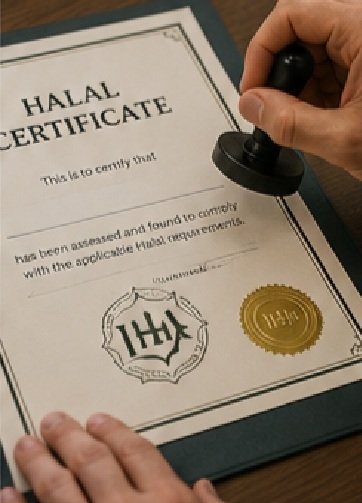
7. Certification Decision

The assessment results are reviewed and a certification decision is made according to the applicable requirements.
8. Surveillance & Renewal

Follow-up assessments, surveillance, or renewal activities may be required to confirm continued compliance.

Frequently Asked Questions

The certificate applies only to the products, services, processes, facilities, or locations included in the approved certification scope.

Requirements vary by sector. Applicants may need to provide company information, product lists, ingredient or material specifications, supplier records, procedures, labels, process information, and other supporting documents.


The assessment method depends on the certification scope and program requirements. An on-site audit may be required where facilities, production, handling, or service operations need to be assessed directly.


The timeframe depends on the complexity of the organization, the completeness of the application, the number of products or locations, audit availability, and the time needed to address any findings.

Yes. The application and initial review can help identify the required scope and preparation needs. Certification can only be issued after the applicable requirements have been satisfactorily met.

Request a Halal Certification Quote

Certification Scope

Select the service area that best matches your request. You may choose more than one option.


Company Information

please provide your company information in the fields below


Contact Person

please provide Contact person information in the fields below, these information should be accurate since our team will use it to come back to you.


Project Details

Please provide the basic scope of your request so we can prepare a more accurate quotation.


Product Information


Slaughtering & Animal Welfare Information


Hospitality & Food Service Information


Logistics Information


Islamic Banking Information


Laboratory Testing Information
